Estela
47 E Houston St 1st floor
New York, NY 10012
(212) 219-7693
Official Site
Bistronomy is a term coined in the early 2000s by French food critic Sébastien Demorand—a fusion of “bistro” and “gastronomy,” describing high-quality, creative cooking served in a more relaxed, casual setting. In essence, it delivers fine dining caliber food without the formalities traditionally attached to it. In New York City, one of the most notable examples of this movement is the one-Michelin-starred Estela in NoHo.
Opened in 2013 by Uruguayan-born chef Ignacio Mattos, Estela quickly became a critical darling, earning a two-star review from The New York Times and securing its Michelin star in 2019, which it has maintained ever since. Before striking out on his own, Chef Mattos trained at Chez Panisse under Alice Waters and worked with Argentine celebrity chef Francis Mallmann. He later moved to New York, spending time at Il Buco before opening the acclaimed Isa in Williamsburg. With Estela’s success, Mattos went on to launch Mattos Hospitality, which also operates Altro Paradiso.
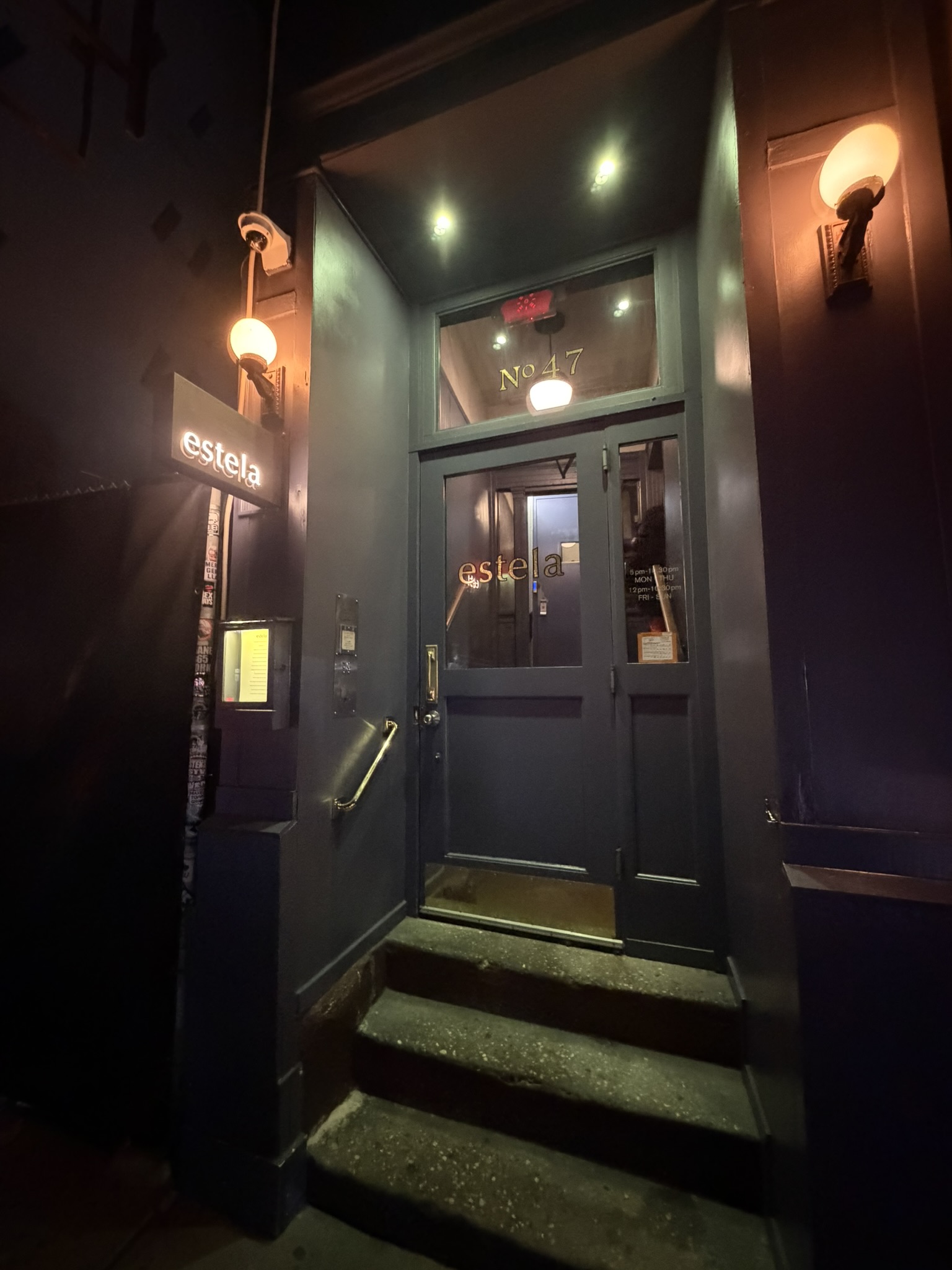
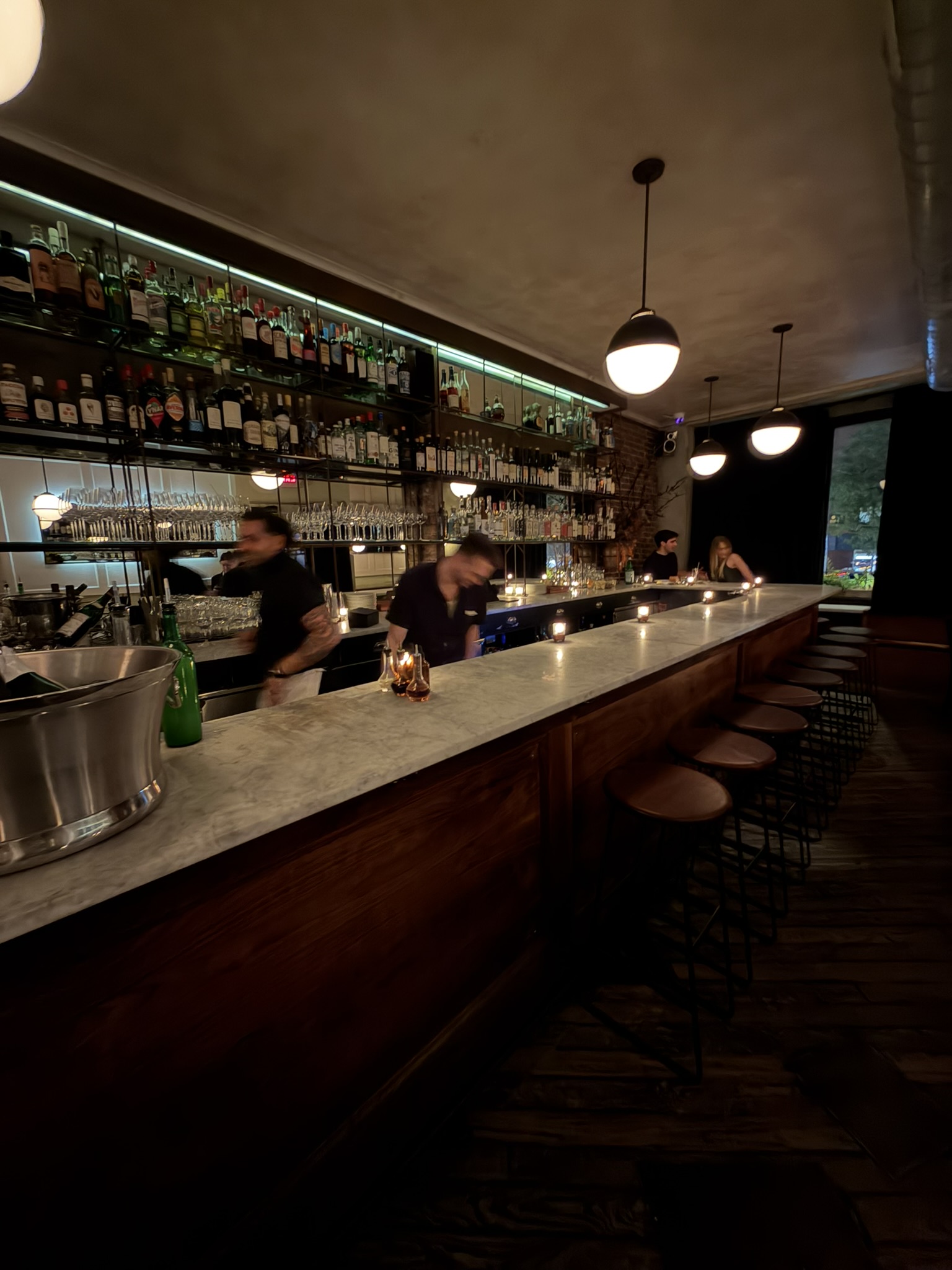
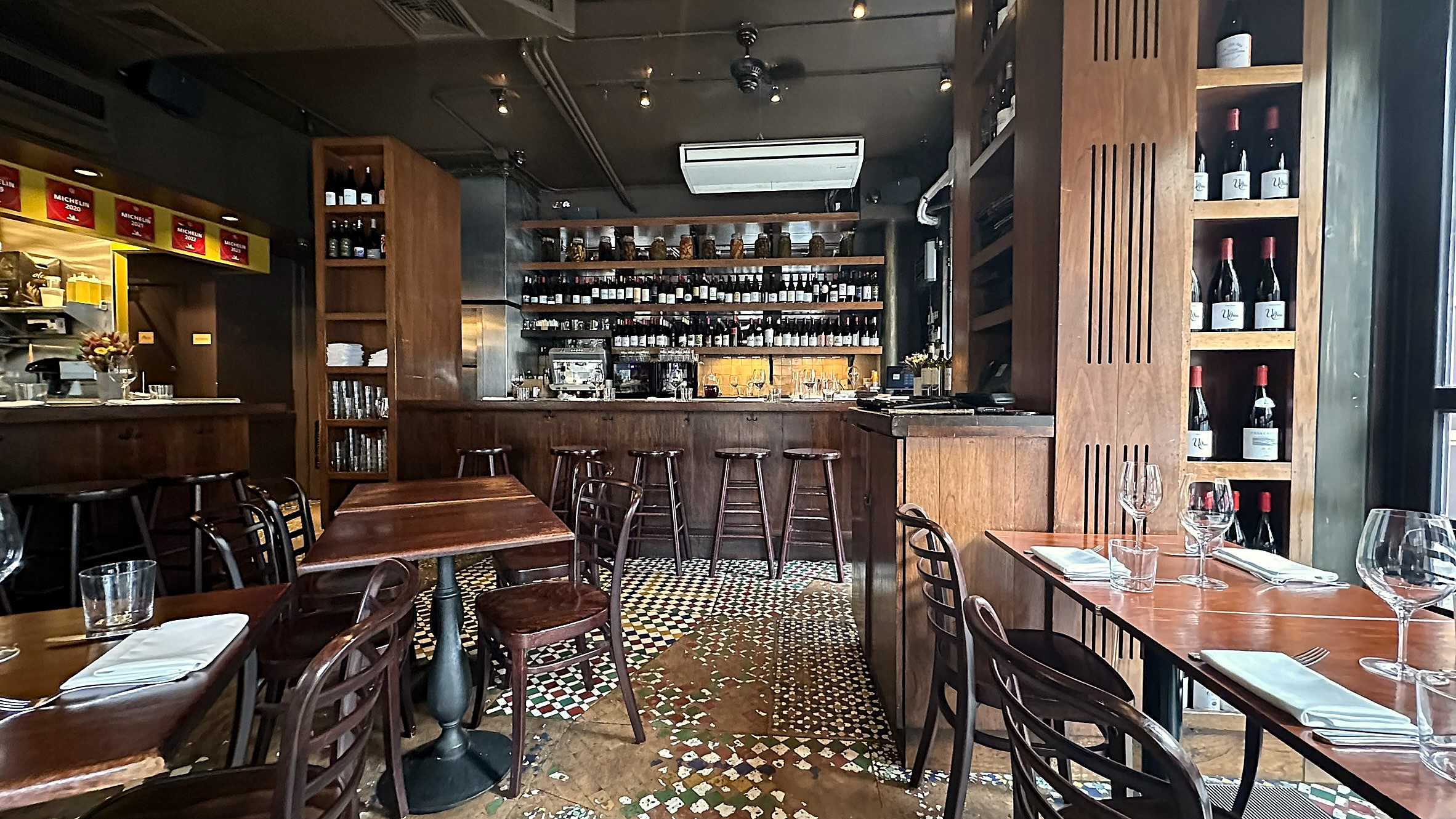
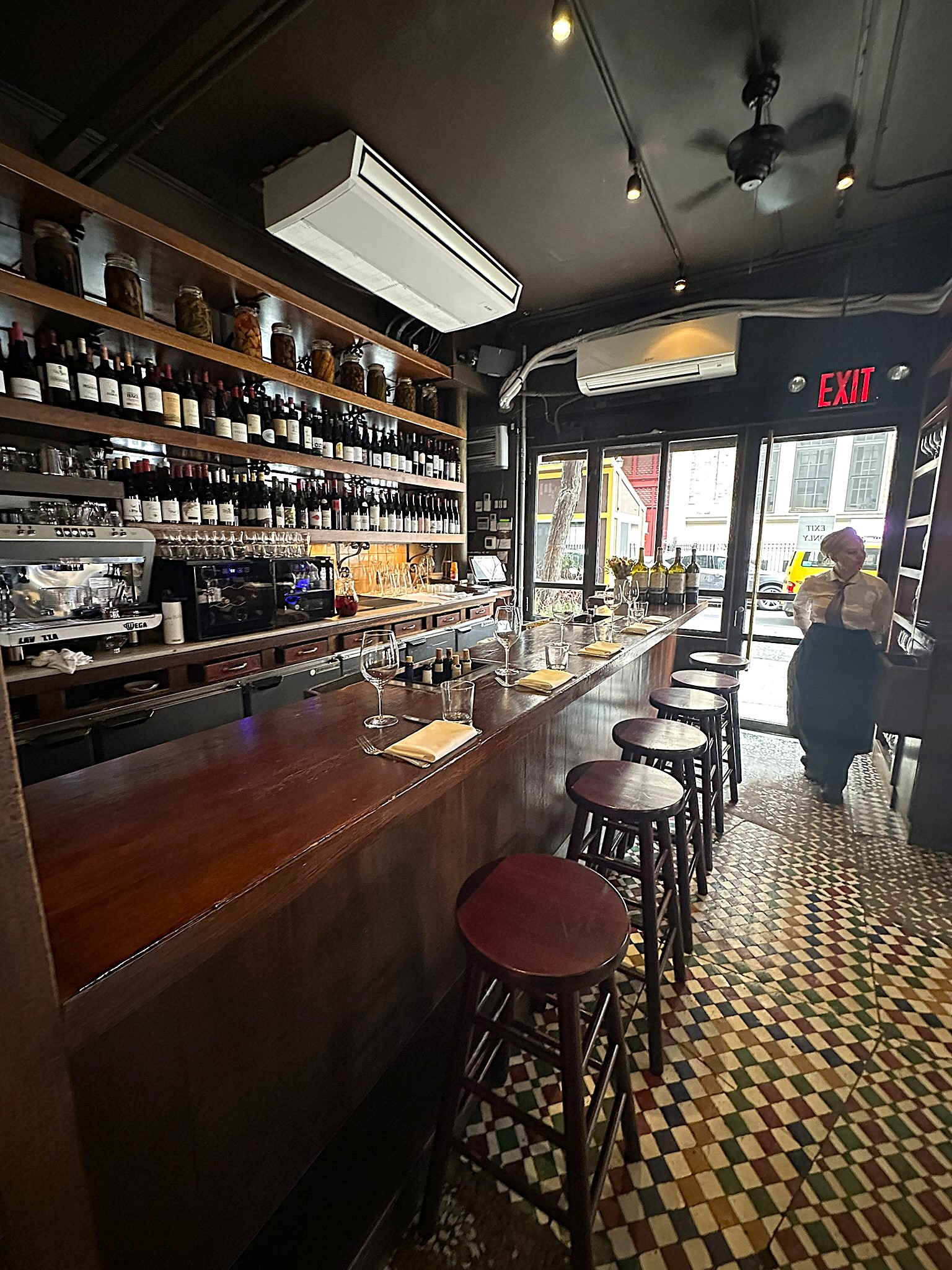
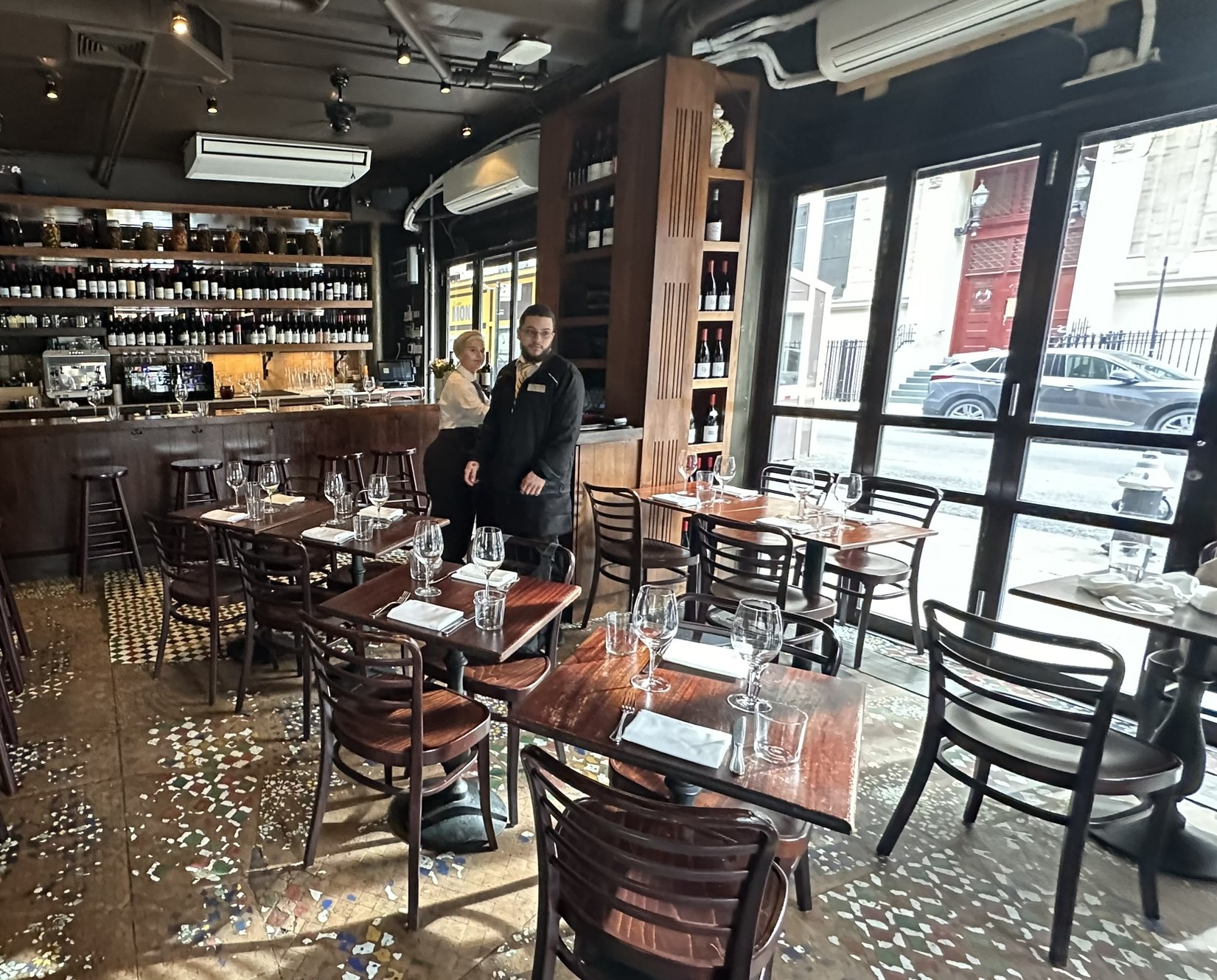
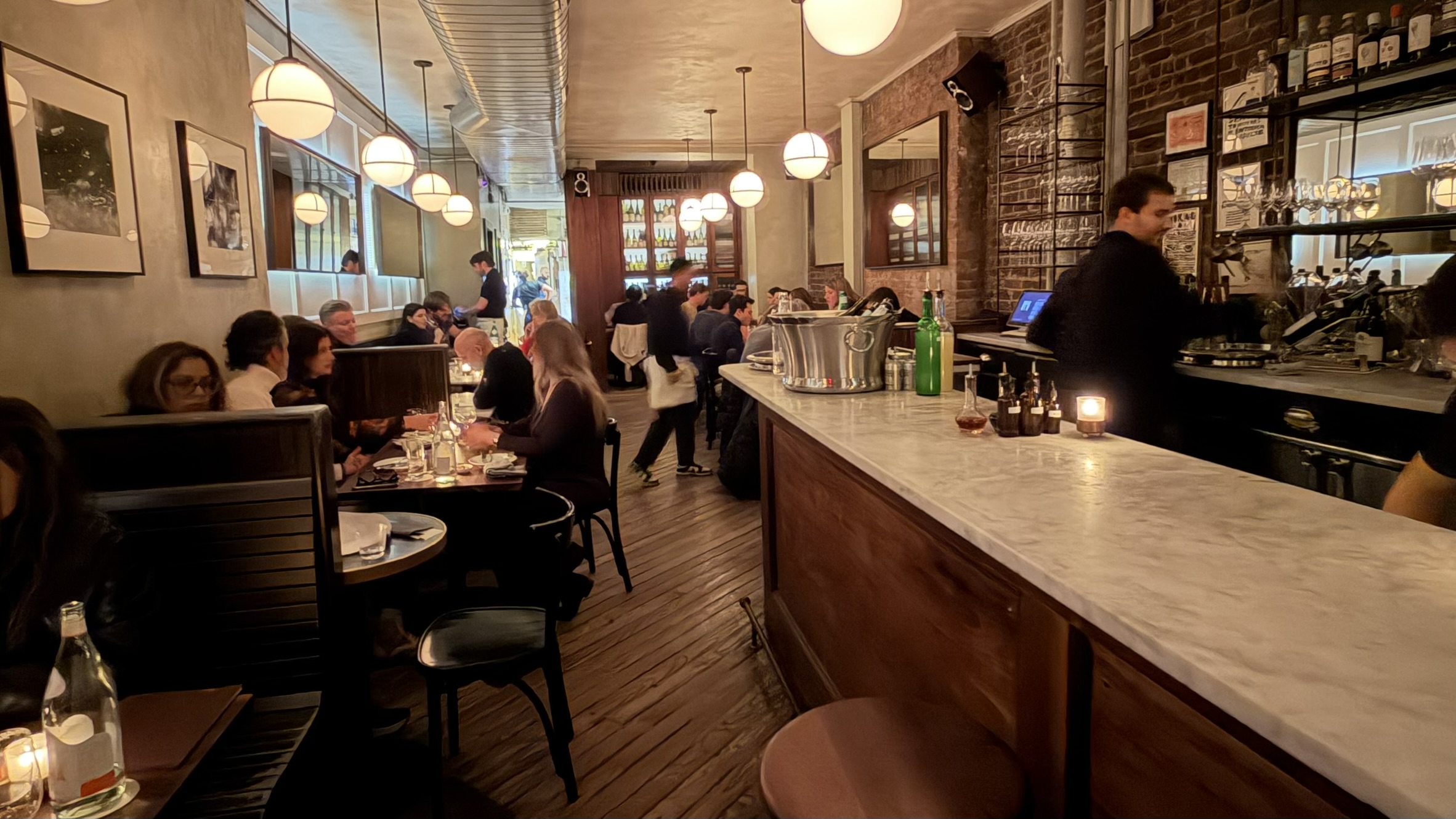
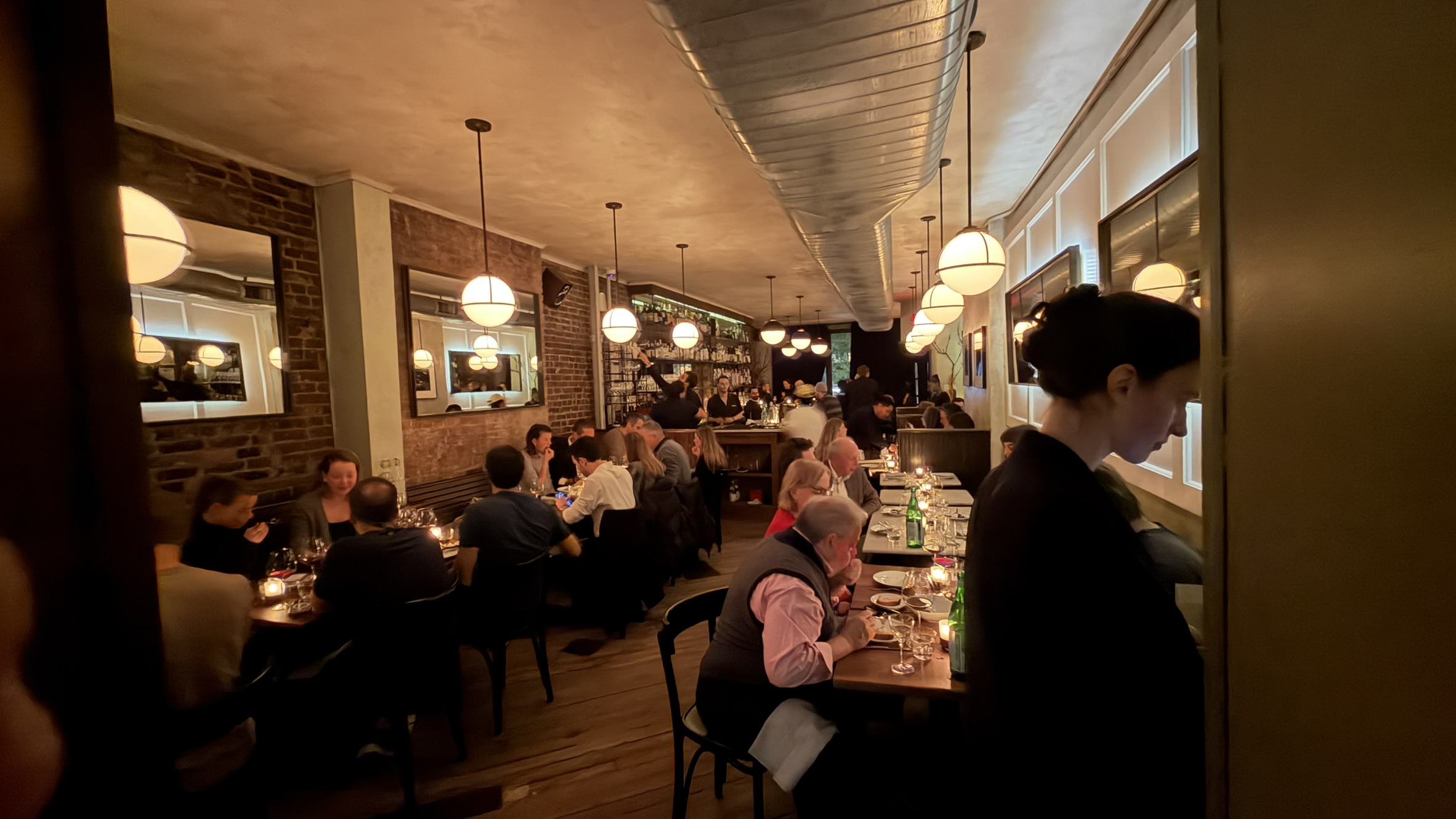
Estela sits along Houston Street, tucked above a bar known for its inexpensive happy hour specials. Upon entering, a marble bar immediately comes into view, setting the tone before the space opens into a compact, lively dining room that can get quite loud. Tables are tightly packed in a mix of formats, paired with hard wooden chairs, while the worn wooden floors creak with nearly every step—adding to the restaurant’s unpolished, downtown charm.
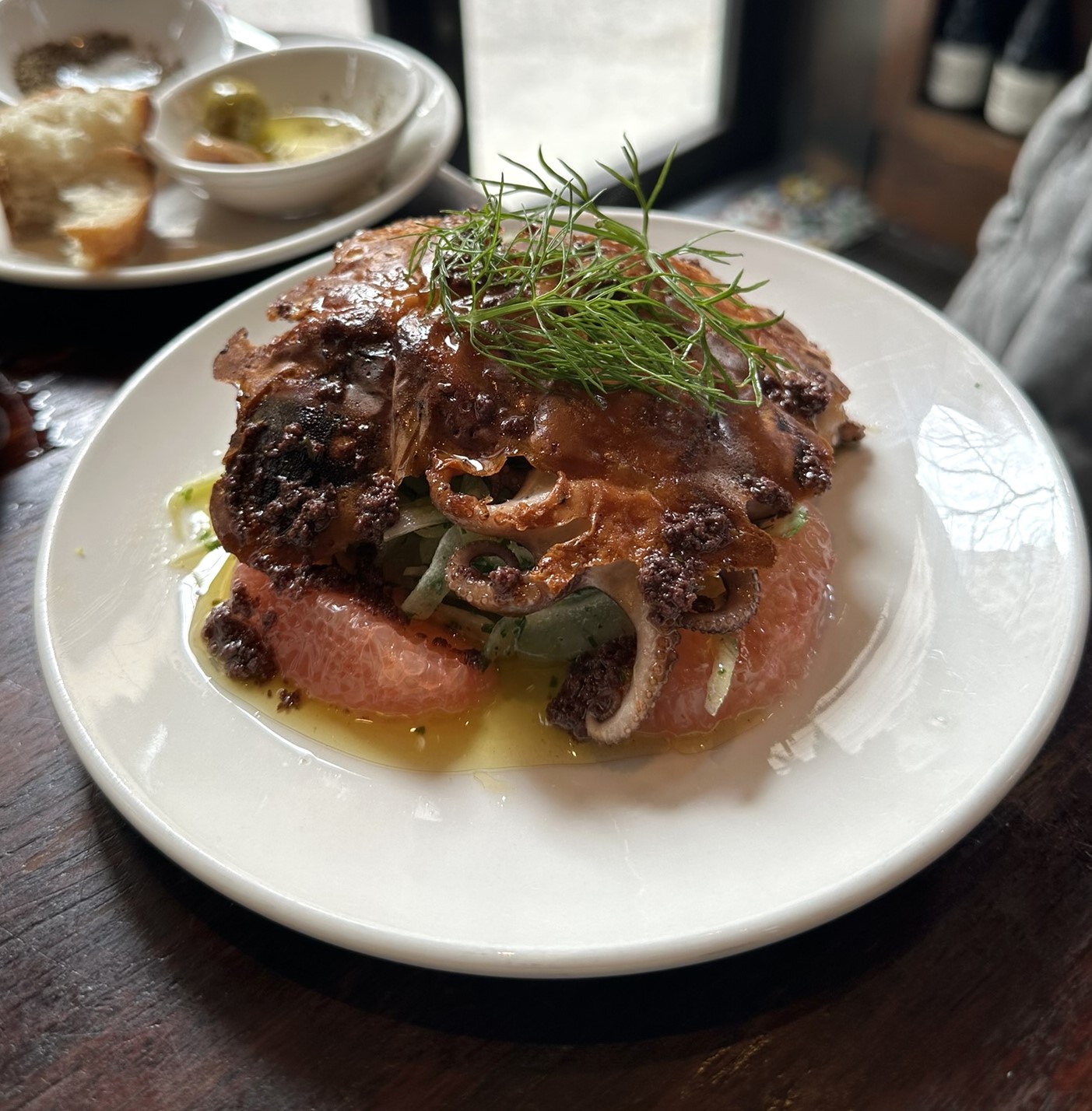
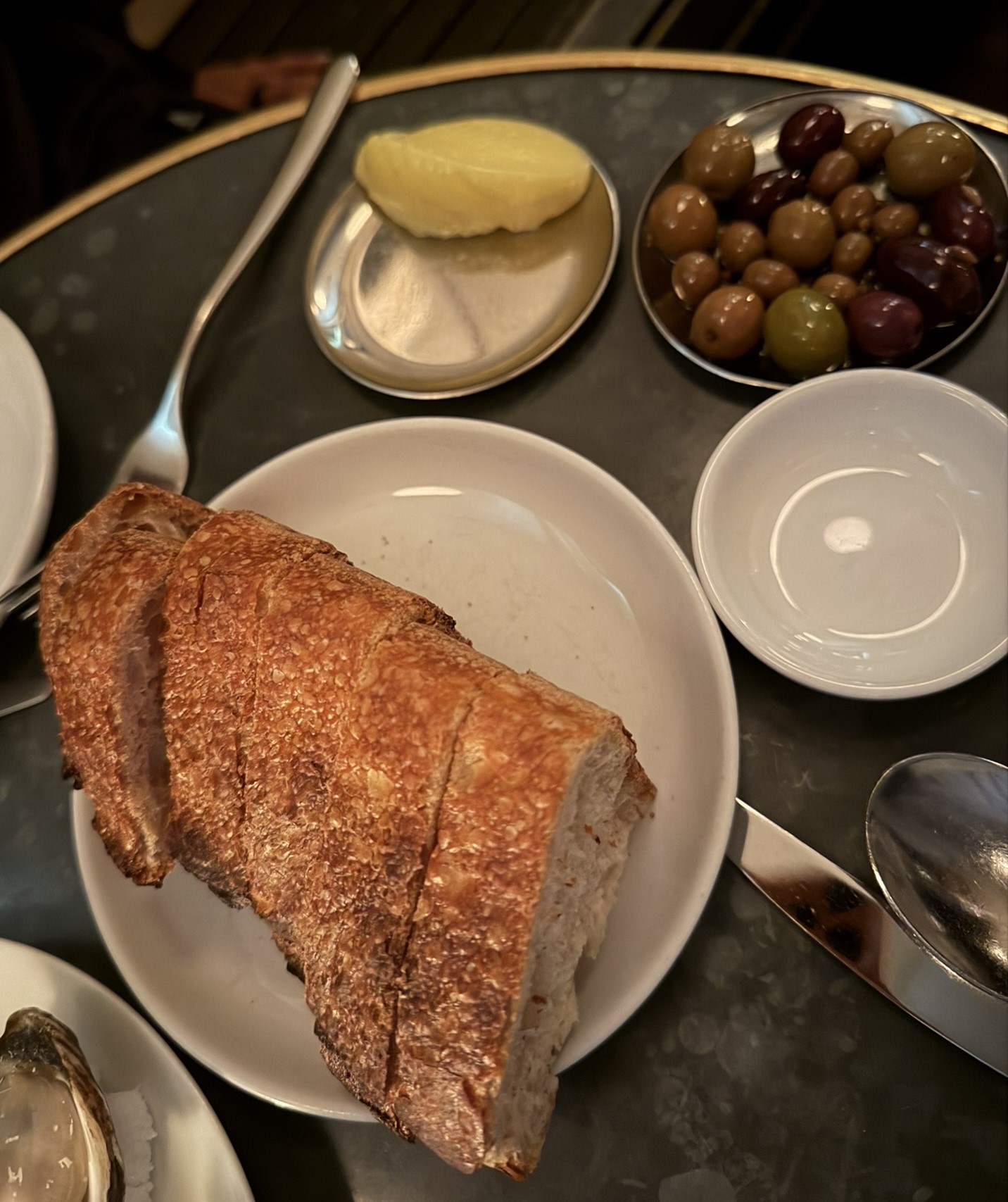
Open for dinner seven days a week and lunch on weekends, the restaurant offers an à la carte menu with a solid range of options. For two diners, our server recommended ordering five to six dishes—a suggestion we gladly followed. We began with a Sourdough miche with butter and olives served warm. Priced at $7 and not complimentary, it delivered a deeply crusty exterior with a satisfying chew, while the olives provided a simple, briny counterpoint.
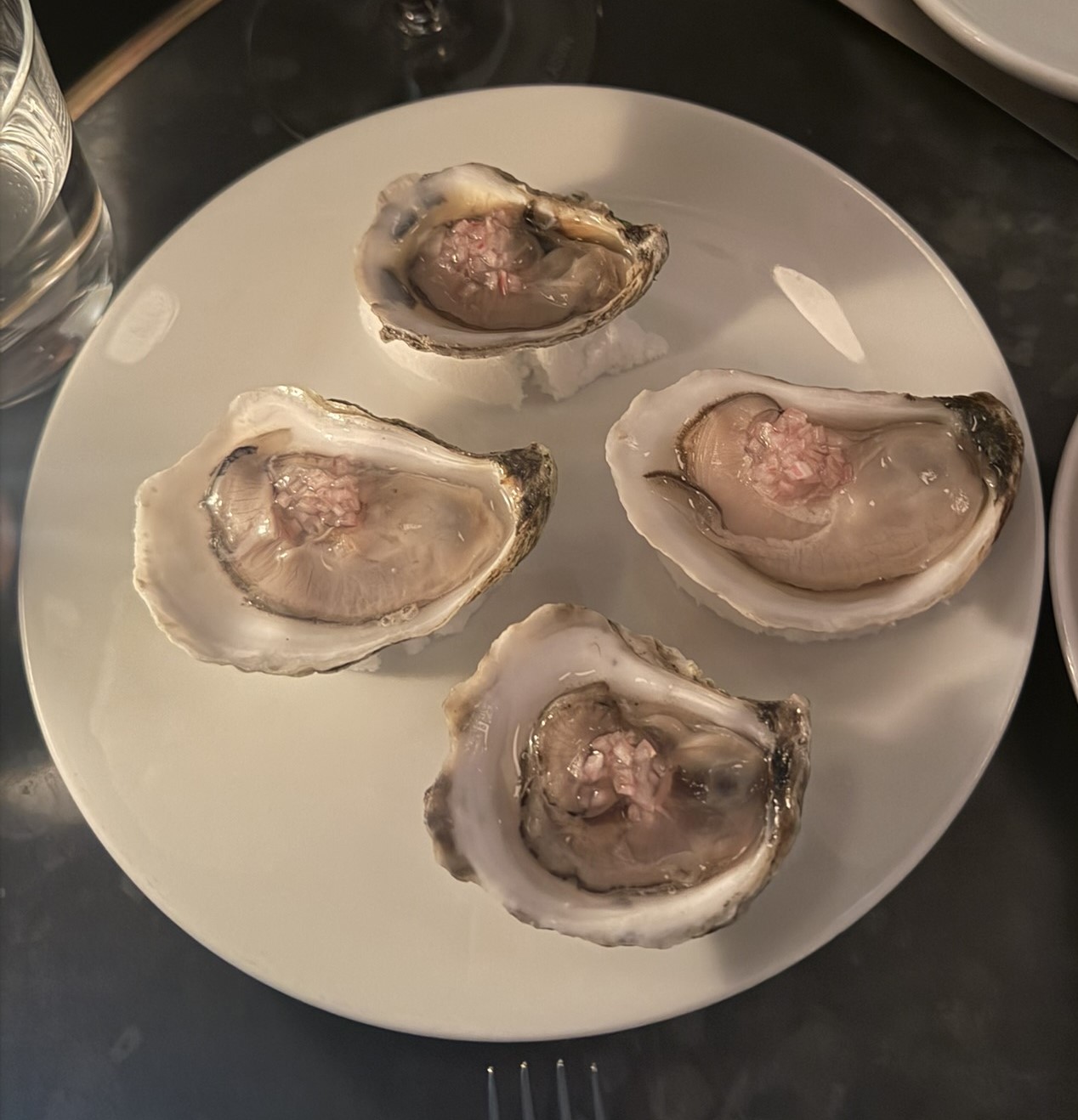
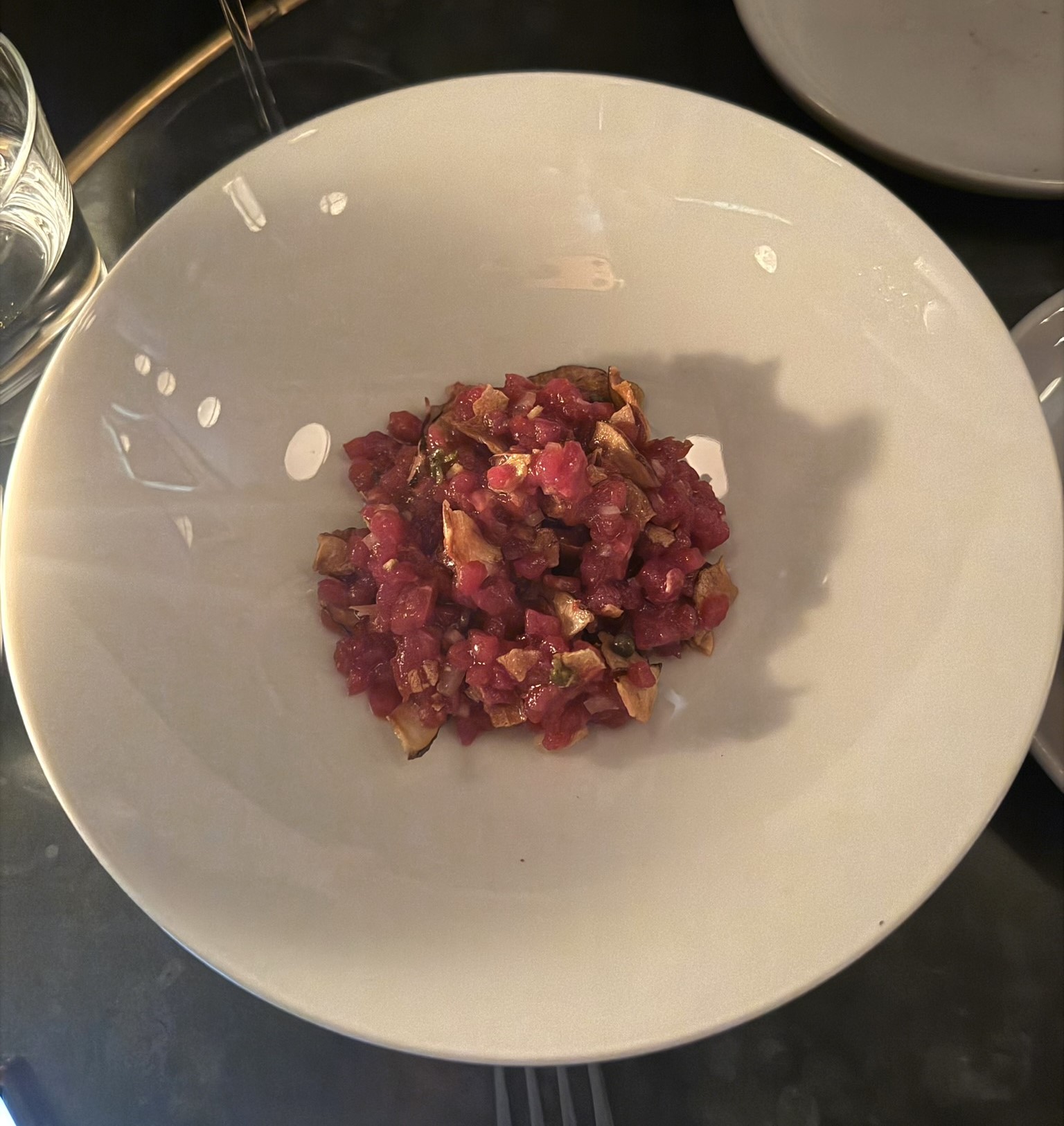
The Oysters with yuzu kosho mignonette, at $5 each, were exceptionally fresh. They carried a clean marine brininess, lifted by bright citrus notes and a gentle heat that lingered pleasantly. The Beef tartare with elderberries and sunchoke followed, offering a balance of freshness and depth. The elderberries introduced subtle sweetness and acidity, while the sunchokes added a mild earthiness that grounded the richness of the beef.
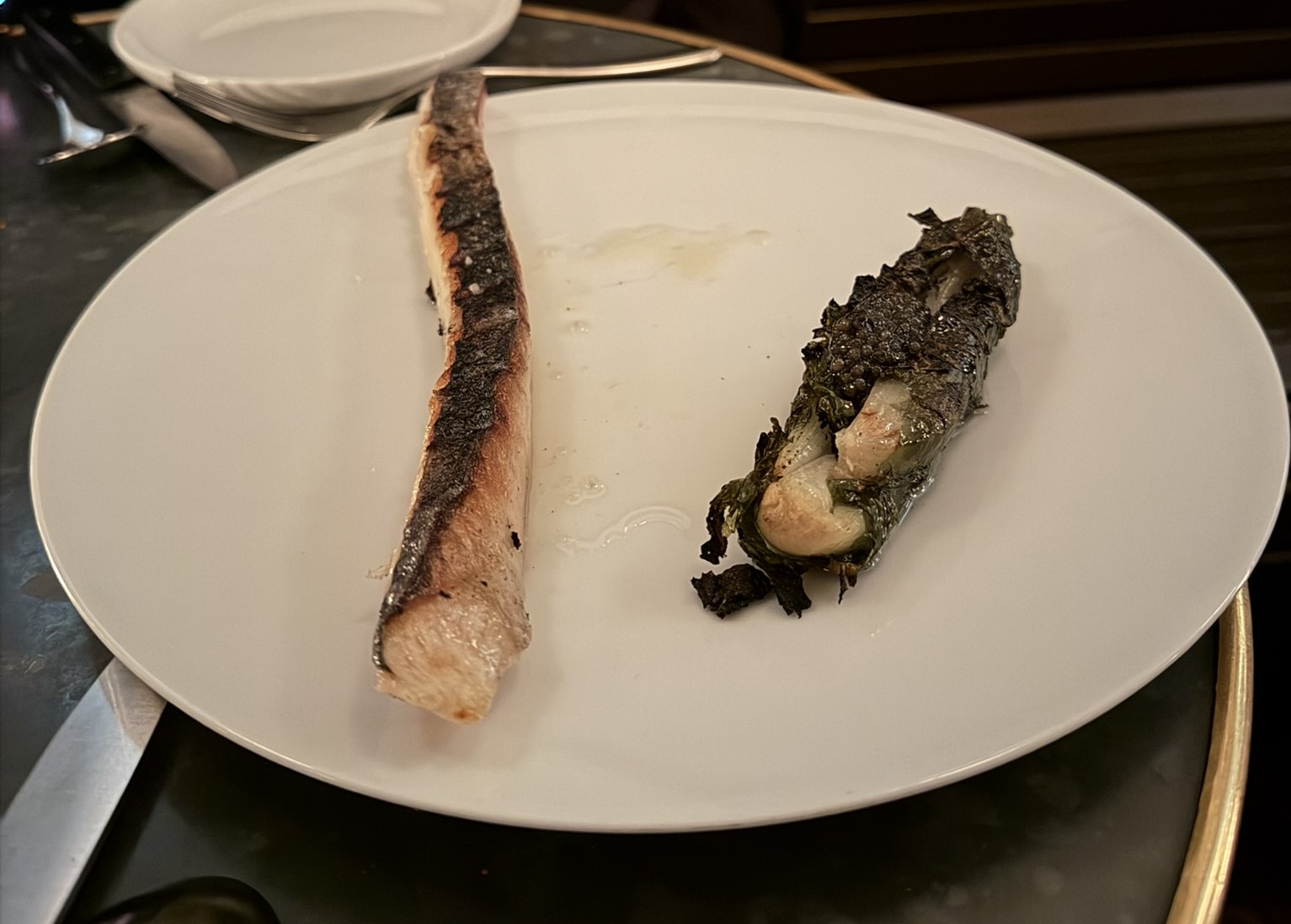
A standout was the Mackerel with smoked torpedo onion and caviar. The fish itself was firm yet tender, with a luscious oiliness. The smoked onion contributed a soft sweetness and gentle smokiness, and when combined with the caviar, the dish became an intense, satisfying burst of flavor.
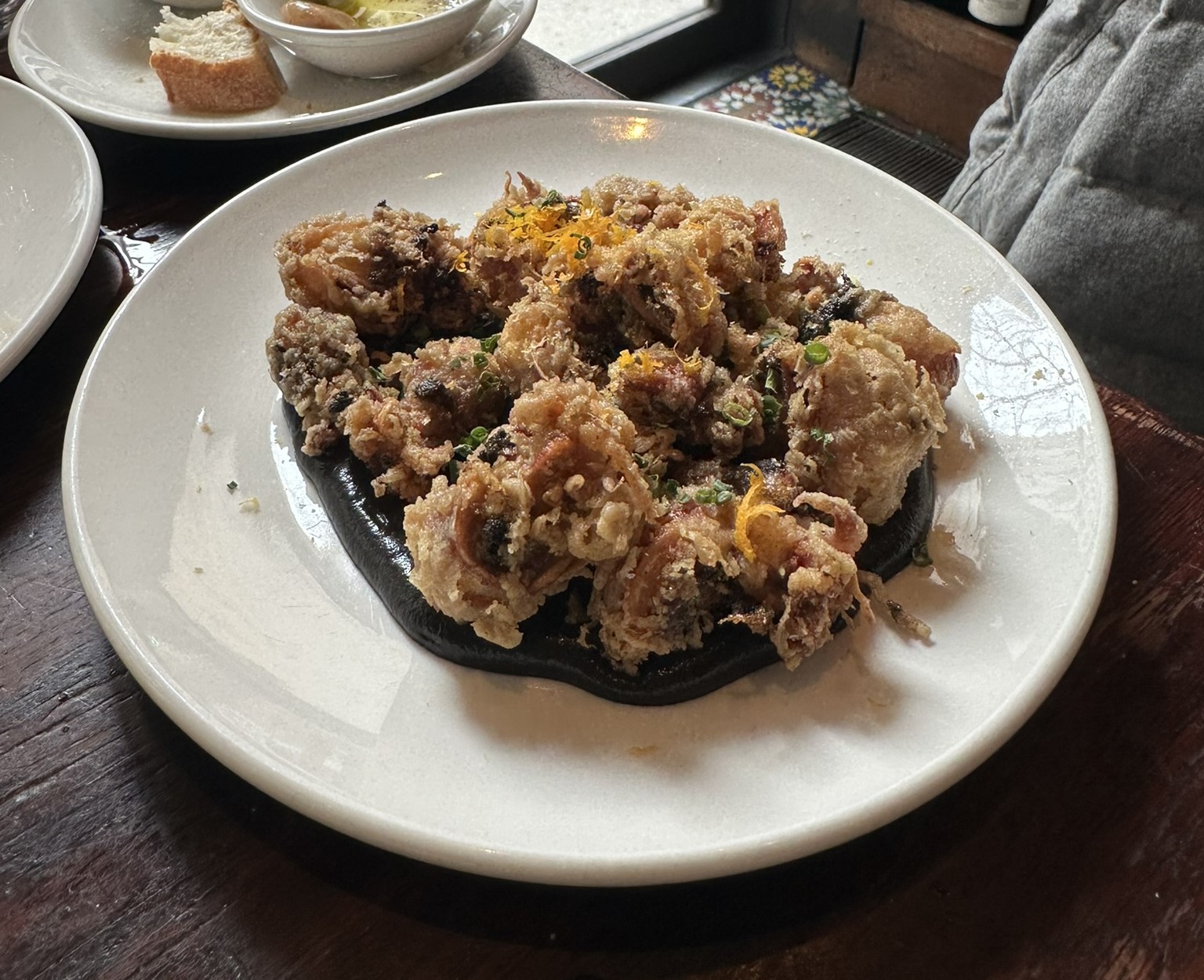
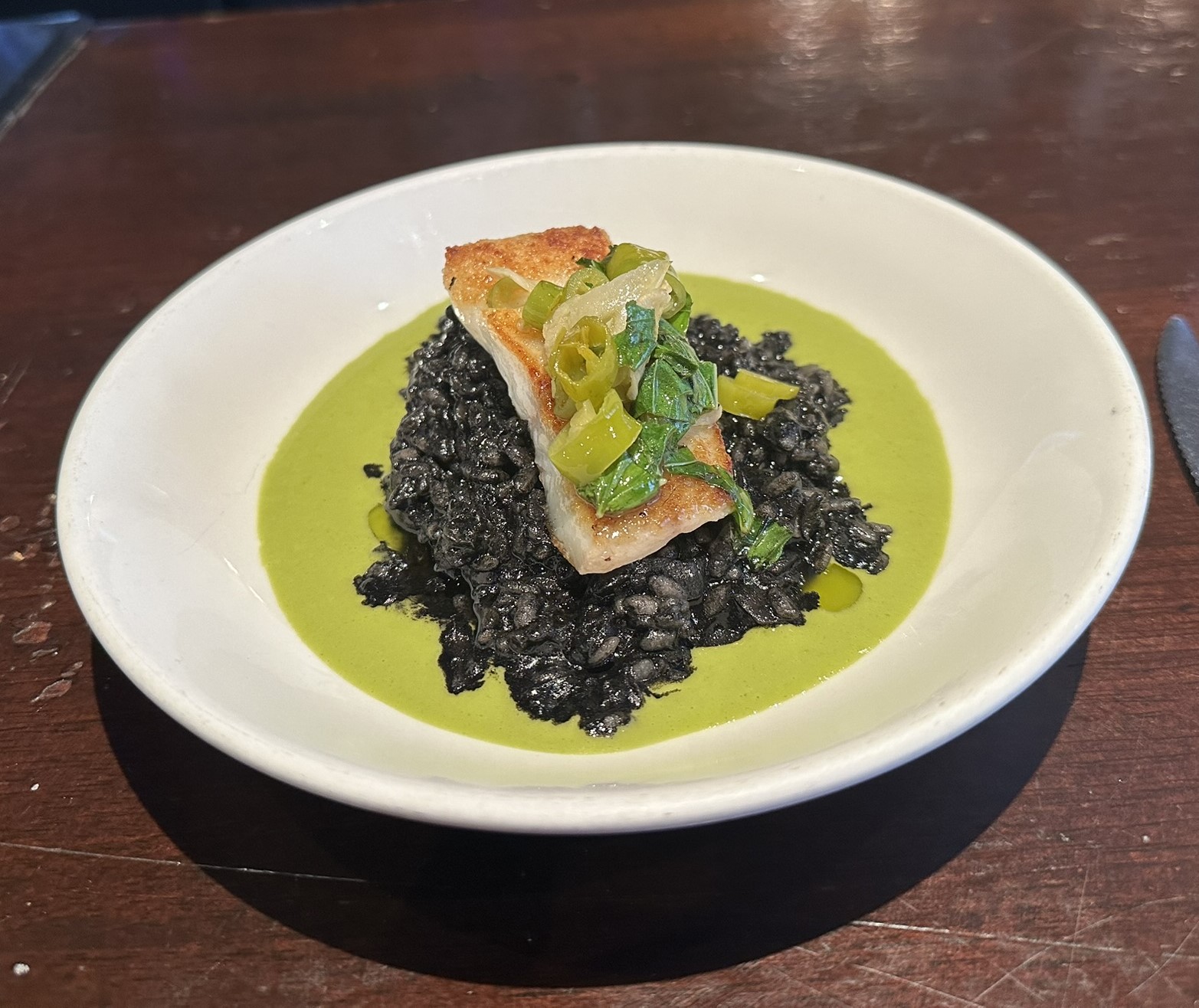
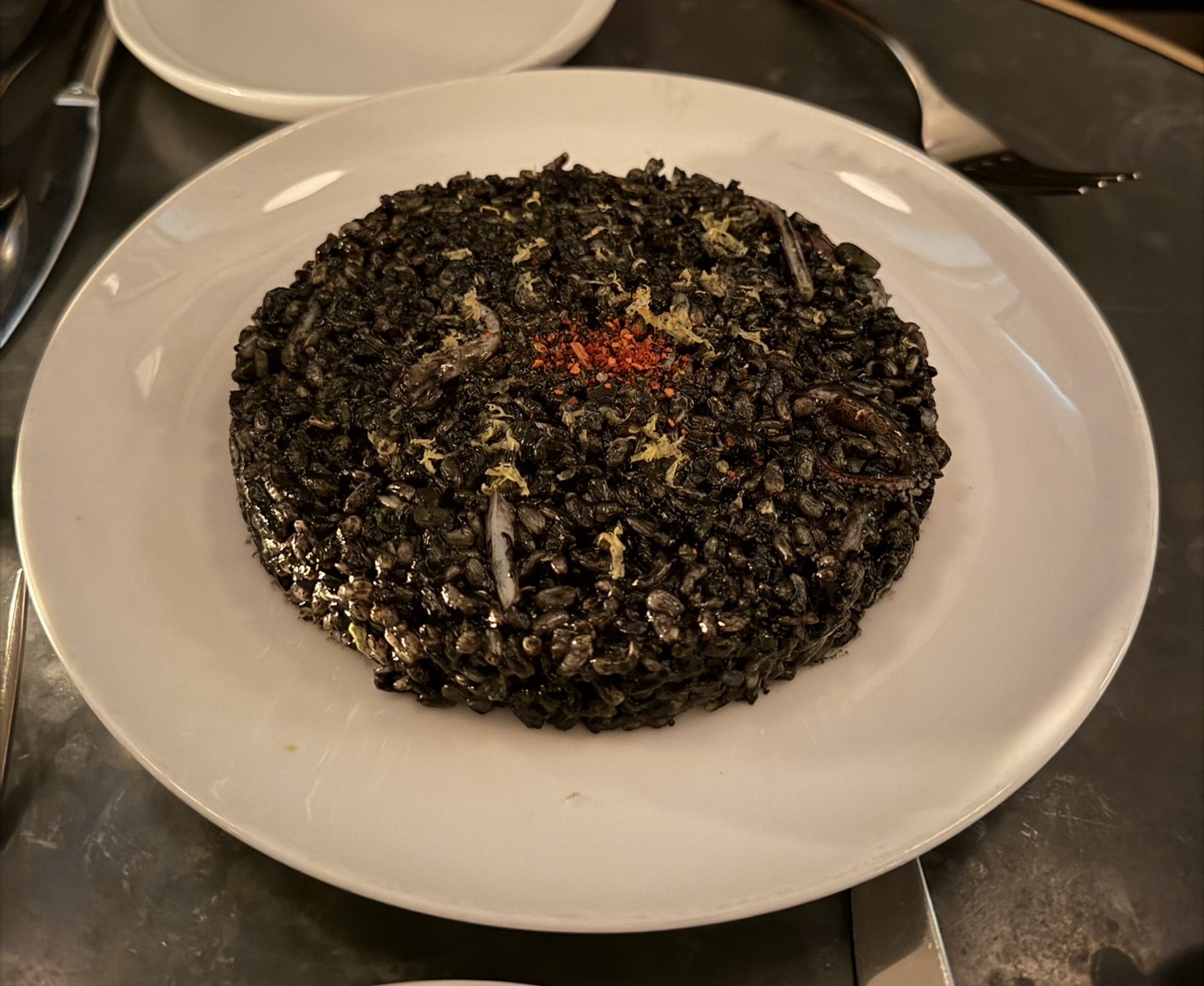
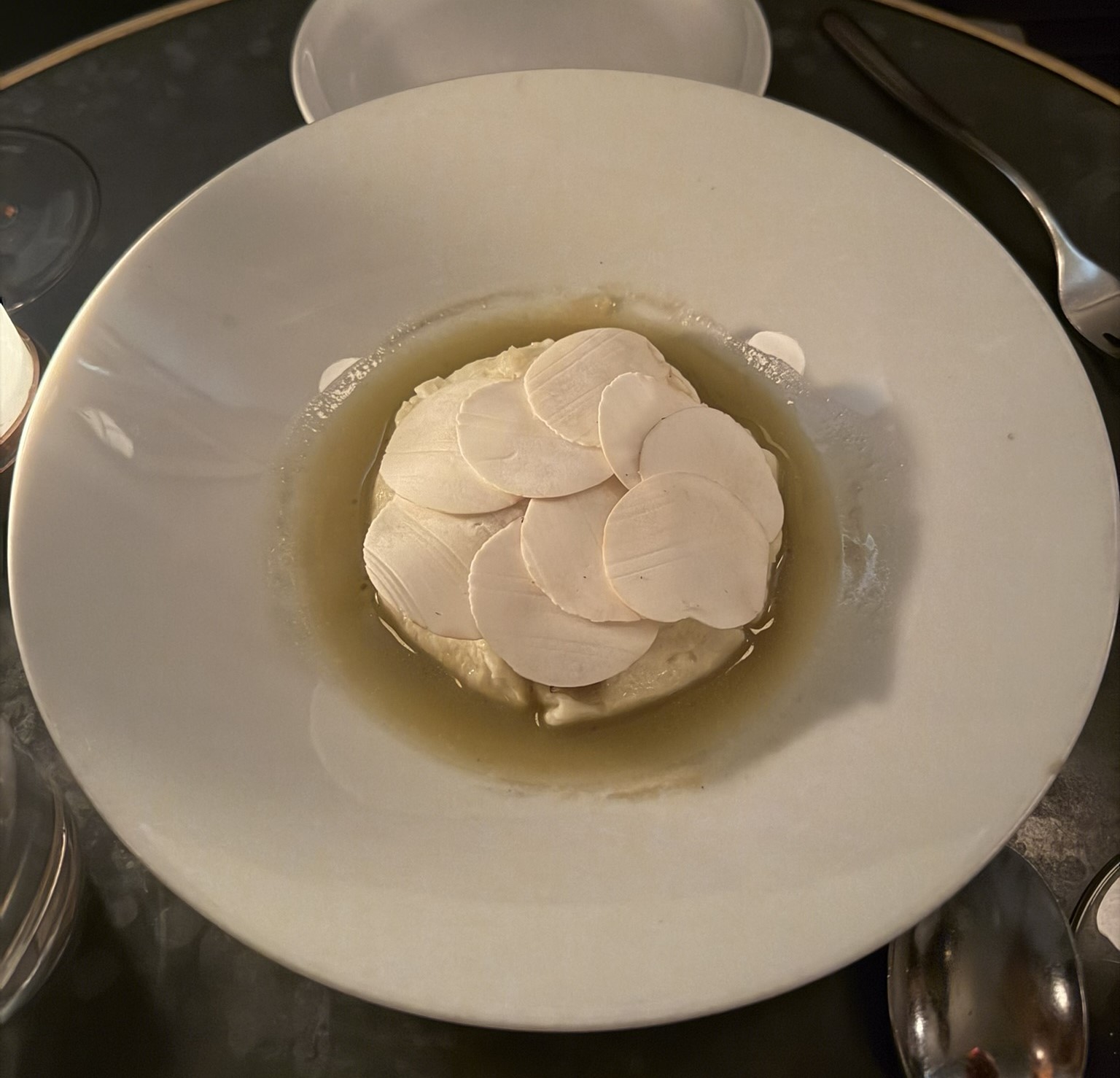
The Fried arroz negro, squid, and romesco—one of the restaurant’s signature dishes—was Estela’s take on the Valencian classic. The rice had a crisp texture while remaining approachable, delivering a deep, oceanic intensity that made it one of the most memorable plates of the evening. The Ricotta dumplings with mushrooms and pecorino sardo offered a softer, more comforting contrast: pillowy, cheese-laden dumplings bathed in a delicate leek broth, layered with thinly sliced mushrooms and sharp pecorino.
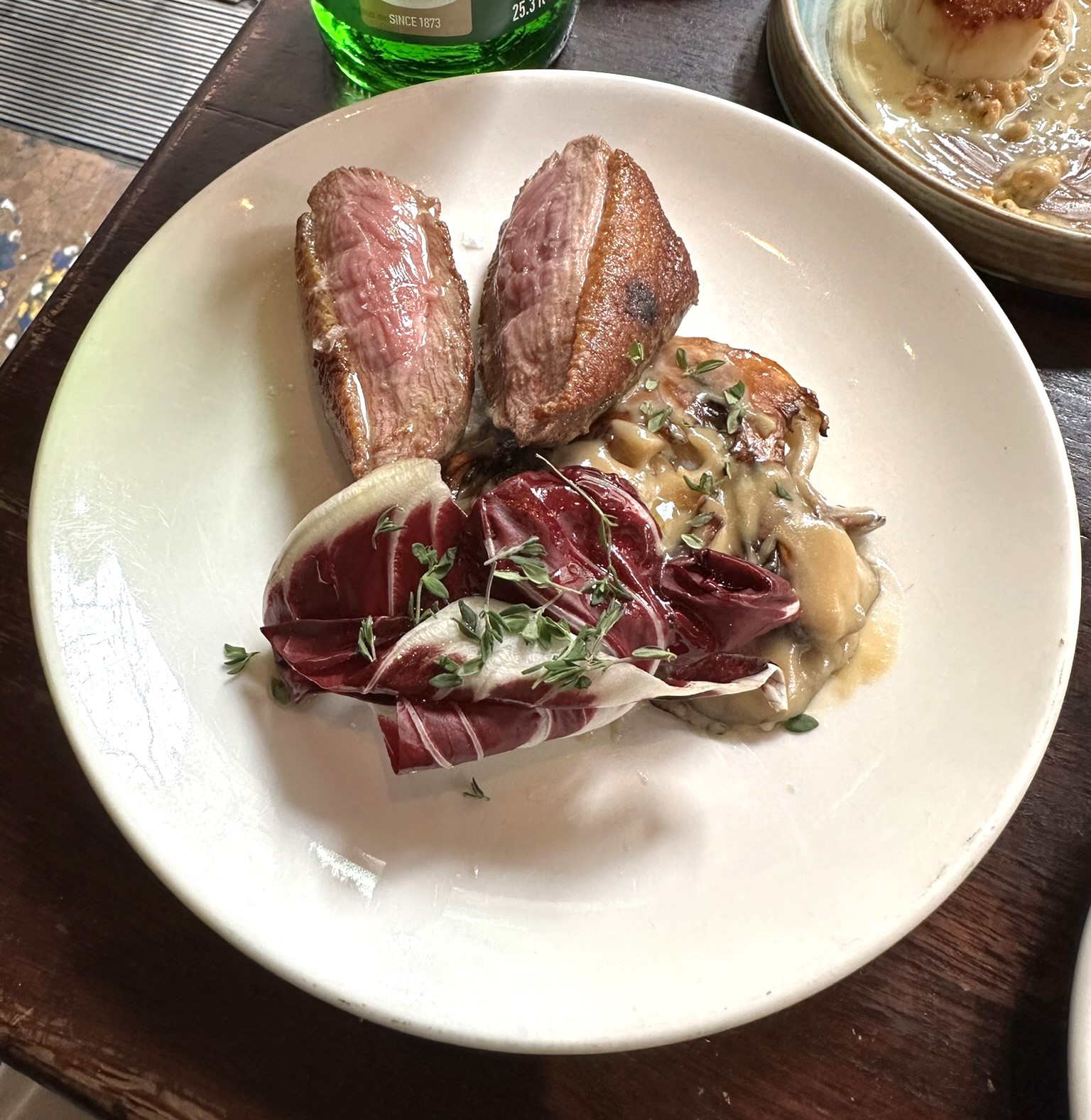
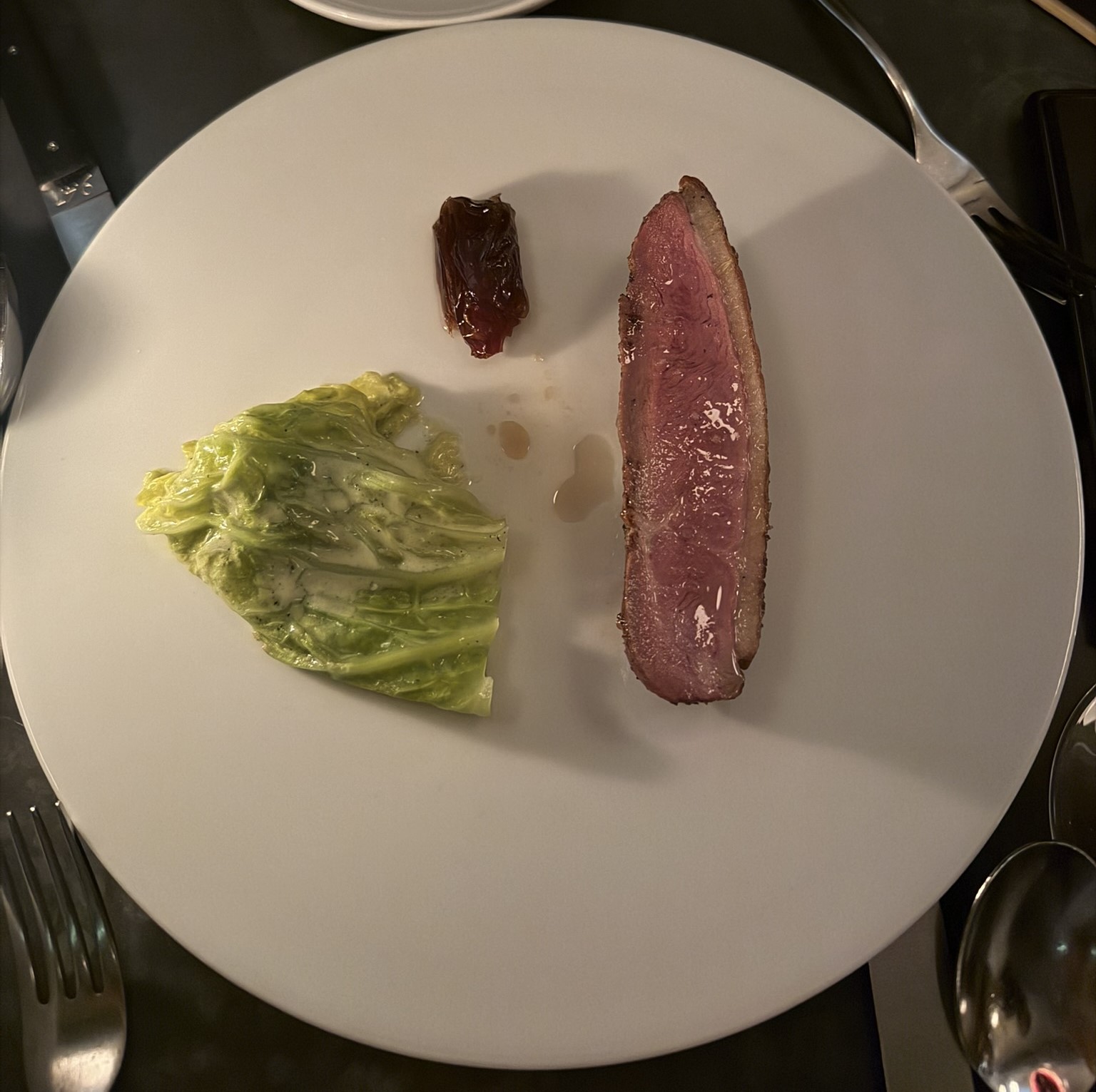
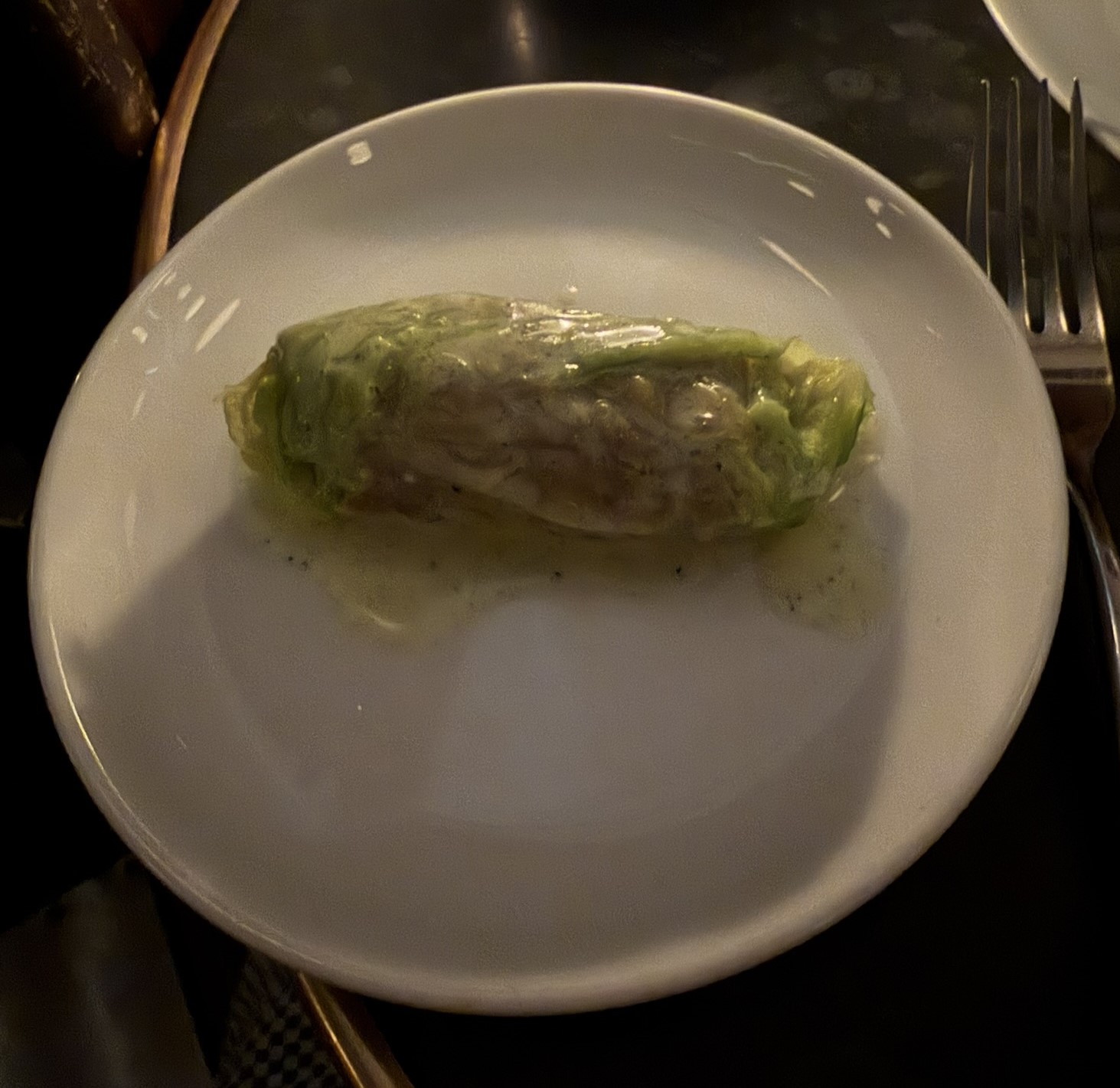
The Crescent duck with stuffed cabbage and date was beautifully executed. The duck was cooked to a perfect rosy pink, tender and succulent, with concentrated flavor. The accompanying stuffed cabbage, filled with duck, reinforced the richness, while the dates added a welcome touch of sweetness to round out the dish.
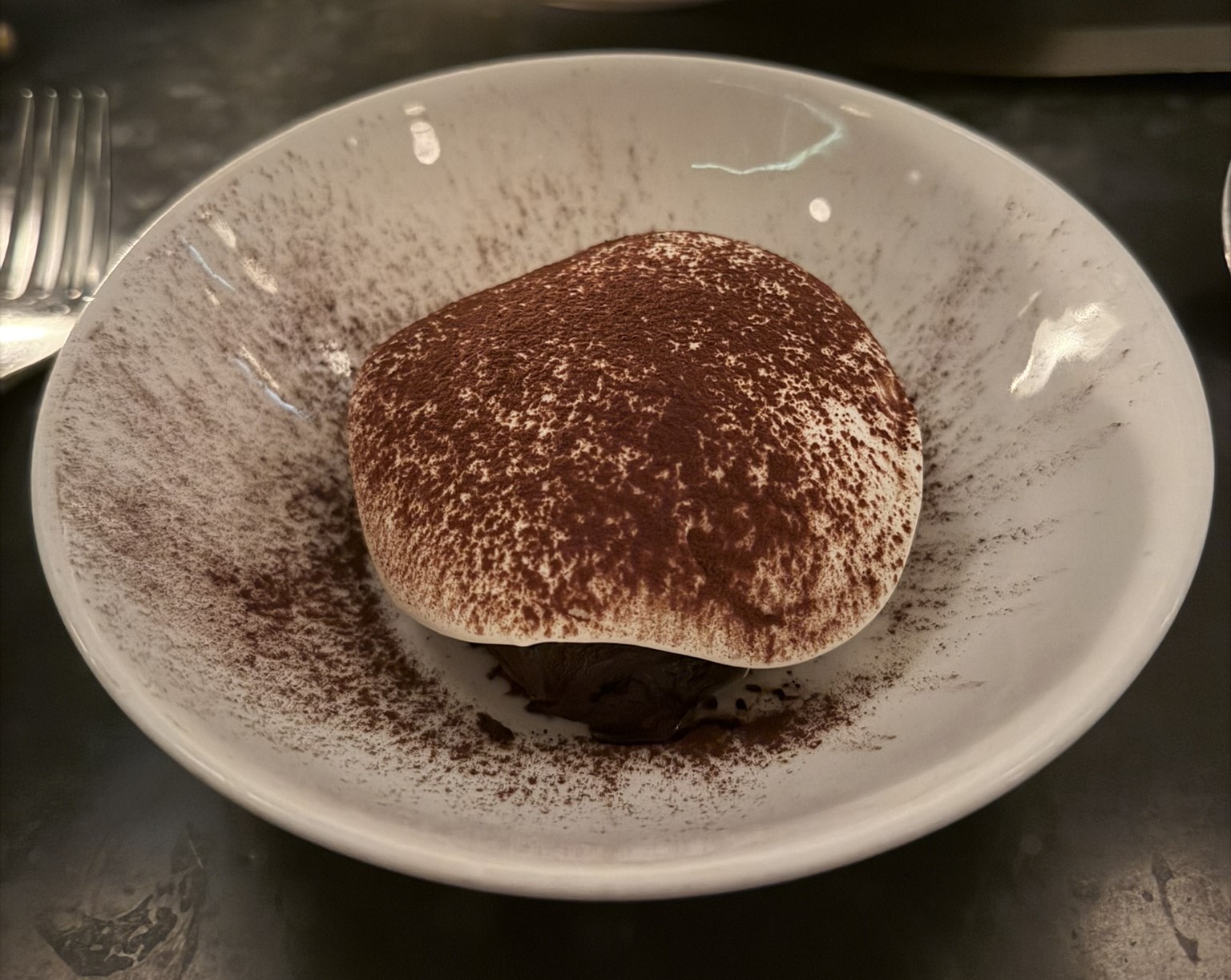
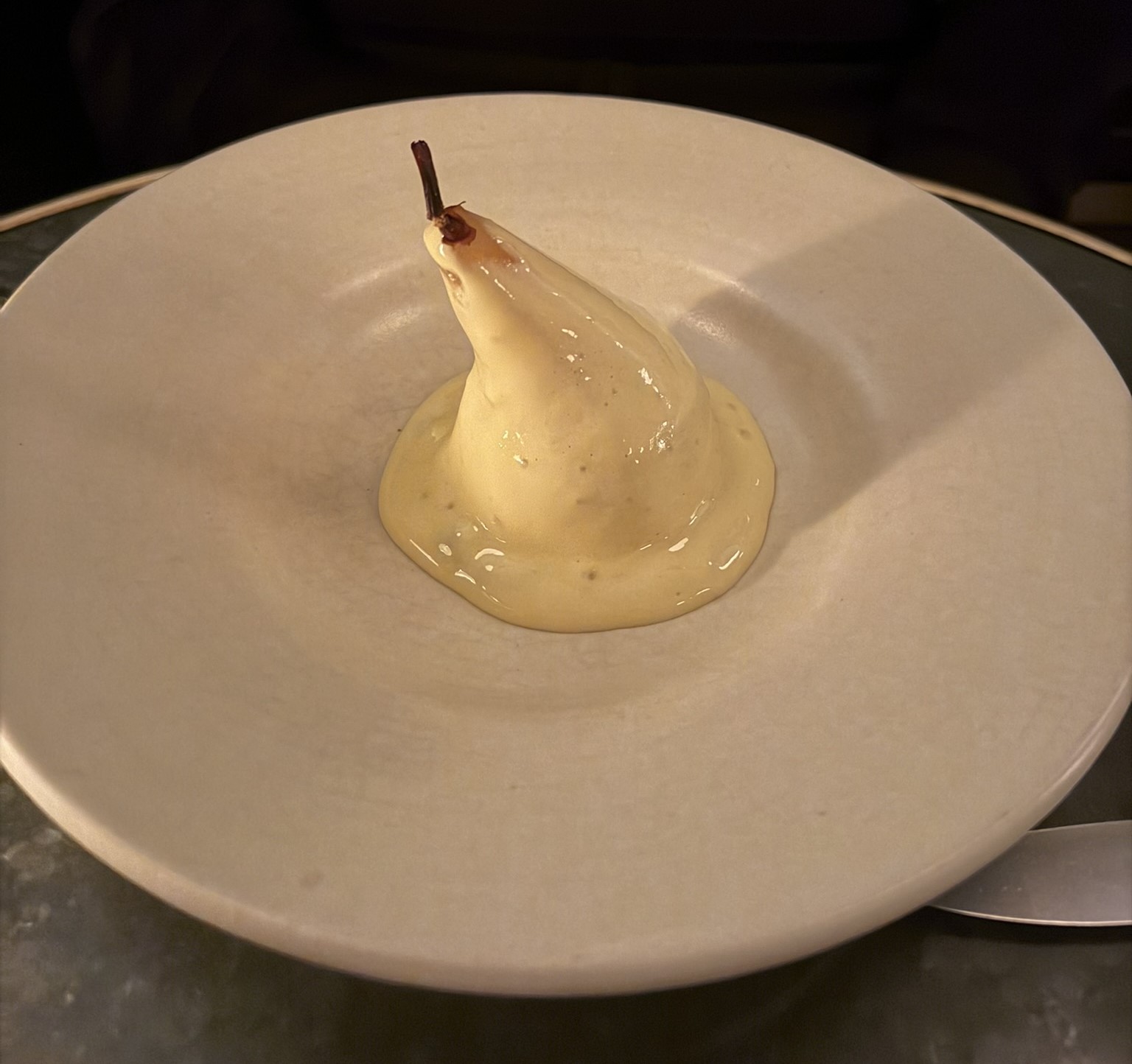
For dessert, we sampled two offerings. The Chocolate cake with sesame ganache and cream was deeply decadent—rich, dense, and thoroughly indulgent.In contrast, the Poached pear with pistachio and sobayon leaned lighter, with natural fruit sweetness complemented by a silky custard-like sabayon and a nutty pistachio finish.
Dining as a pair allowed us to experience a broad cross-section of the menu. The cooking at Estela is deceptively simple in appearance but layered in technique and thought. Each dish feels restrained yet complex, with a clear focus on flavor. Overall, the meal was cohesive, creative, and thoroughly enjoyable.
Service matched the tone of the restaurant—casual yet polished. Our server was warm, personable, and attentive, offering clear explanations of each dish with genuine enthusiasm.
For dinner for two, including two glasses of wine each, the total came to just over $400 with tax and gratuity. While certainly on the pricier side, the quantity and quality of the eight dishes we shared left us fully satisfied.
Bistronomy, at its best, offers the luxury of exceptional cooking without the weight of occasion. There are nights when one craves food of fine dining caliber without the ceremony, and Estela delivers precisely that. It’s a reminder of why New York City remains one of the best places in the world to dine.